
Vastu shastra, the traditional Indian science of architecture and spatial harmony, extends from the layout of cities to the orientation of your pillow. Among its most widely known prescriptions is the direction in which you should rest your head while sleeping. The rule is simple to state but rests on a view of the body and the Earth as participants in a single magnetic and energetic system.
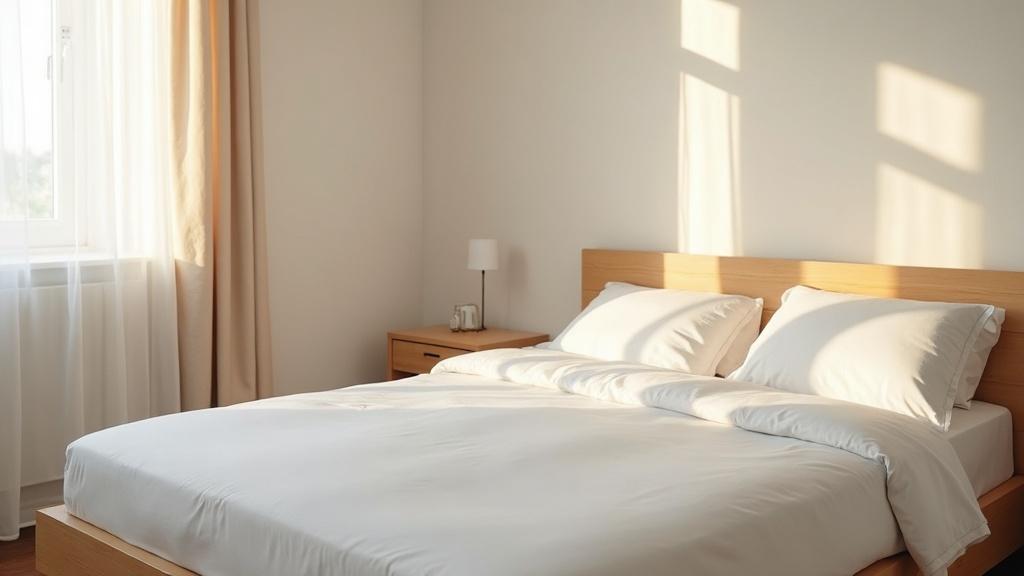
The cardinal rule and its reasoning
Vastu texts recommend that you sleep with your head toward the south or the east. Sleeping with the head pointing north is strongly discouraged. The reasoning draws on two ideas: the Earth's magnetic field and the concept of prana, the life force that moves through the body.
The Earth behaves as a giant magnet with its magnetic south pole near the geographic North Pole. Tradition holds that the human body also has a magnetic polarity, with the head corresponding to the north pole. Placing your head toward the north, the texts argue, creates a repelling force that disturbs circulation, increases restlessness, and over time drains vitality. Pointing the head south aligns the body's field with the Earth's, promoting deeper rest and steadier health.
Eastern orientation is considered auspicious for students, scholars and those seeking clarity, as the rising sun is associated with knowledge and new beginnings. Western orientation is regarded as neutral, neither harmful nor especially beneficial.
What the classical texts say
The Vastu Shastra and related architectural manuals do not devote long chapters to sleep direction, but the principle appears consistently. It is treated as part of a broader concern with orientation: which way a deity faces in a temple, which direction a householder should face while eating or studying, and so on.
Some later commentaries link the north-pointing prohibition to the practice of laying out the dead with the head toward the north, reinforcing the association between that direction and the departure of life. Others cite Ayurvedic physiology, suggesting that the body's subtle channels, or nadis, function best when aligned with geomagnetic flow.
There is no single canonical verse that all lineages cite, and you will find variation in emphasis. What remains constant is the caution against sleeping with the head north and the endorsement of south and east.
Practical application in a modern home
In an apartment in Toronto or a townhouse in New Jersey, rearranging furniture to follow vastu can be straightforward or nearly impossible, depending on the floor plan. If the bedroom allows only one practical position for the bed and that position puts your head toward the north, you face a choice.
Vastu is a guide, not a law of physics. The tradition itself acknowledges that not every building can conform to every principle. In such cases, many practitioners suggest doing what is feasible: if you cannot change the bed's orientation, ensure the room is uncluttered, well-ventilated and free of electronic devices near the head. A calm environment supports rest even when alignment is imperfect.
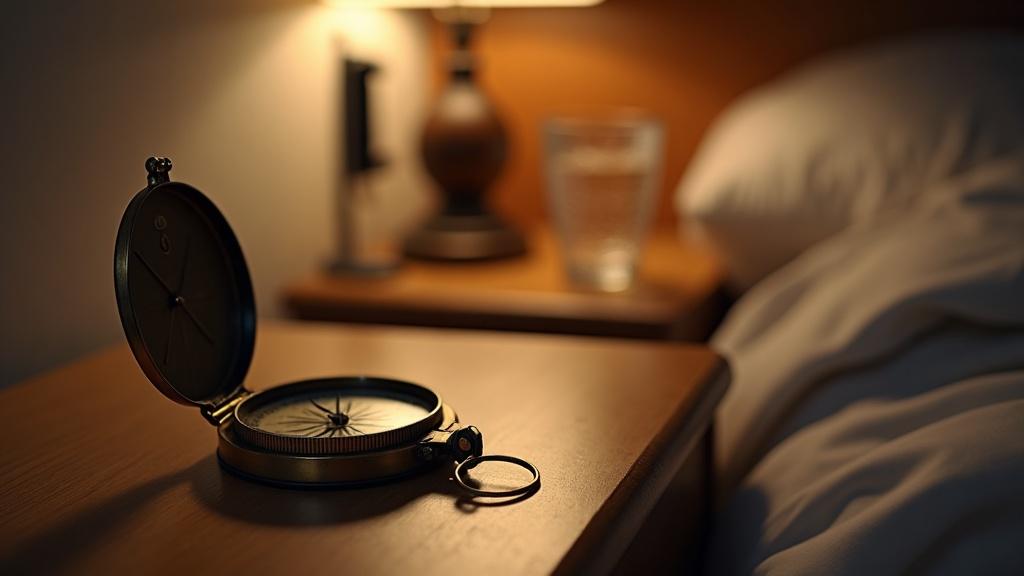
If you do have flexibility, measure with a compass rather than guessing. Magnetic north and geographic north differ slightly depending on your location, but a simple compass will show you the direction that matters for this purpose. Vastu works with magnetic orientation.
Direction, health and the scientific view
Some modern studies have examined whether sleep orientation affects rest quality, blood pressure or other measurable outcomes. The results are mixed and the sample sizes generally small. No large-scale research has confirmed the specific claims of vastu regarding north-pointing sleep.
That does not mean the practice is without value. Sleep is influenced by many factors, including belief, routine and environmental cues. If following a traditional guideline brings a sense of order and reduces nighttime anxiety, that itself may improve rest. Vastu does not ask you to ignore medicine or science; it offers a framework shaped by centuries of observation and a particular understanding of the cosmos.
Summary of directions and their traditional associations
| Direction | Traditional effect | Recommended for |
|---|---|---|
| South | Promotes deep rest, aligns with Earth's field, supports health | Everyone, especially those seeking restorative sleep |
| East | Enhances clarity, learning, new beginnings | Students, scholars, early risers |
| West | Neutral, no strong benefit or harm | Acceptable when south or east is not feasible |
| North | Discouraged, believed to disturb rest and vitality | Avoided in traditional practice |
When to consult a specialist
If you are designing a new home, renovating, or simply want a thorough assessment of your living space, a trained vastu consultant can evaluate the entire layout, not just the bedroom. Our Vastu service provides detailed guidance tailored to your floor plan, and the Vastu Studio tool offers an interactive way to explore principles room by room.
Remember that vastu is one layer of well-being. It does not replace medical advice for sleep disorders, and no directional adjustment will cure insomnia caused by stress, illness or poor sleep hygiene. Use vastu as part of a broader commitment to rest, routine and a calm environment.
A practice, not a prescription
Sleeping direction is among the most accessible vastu principles. It requires no construction, no expense, and no special knowledge beyond a compass and a willingness to rearrange a bed. Whether you follow it closely or adapt it to your circumstances, the practice invites you to consider your home as more than shelter, to see it as a participant in your daily rhythms and long-term health.