
A spare bedroom becomes an office, a corner of the living room holds a desk, and suddenly the boundary between home and work disappears. Vastu Shastra, the traditional science of architecture and spatial arrangement, offers practical guidance for these compressed spaces, focusing on direction, light and the movement of energy through a room.
These principles come from texts like the Manasara and Mayamata, written when work and home were already intertwined for merchants, scribes and artisans. The advice remains relevant because it addresses how a body sits for hours, where fatigue accumulates, and how a cluttered corner affects the mind.
Sitting direction and desk placement
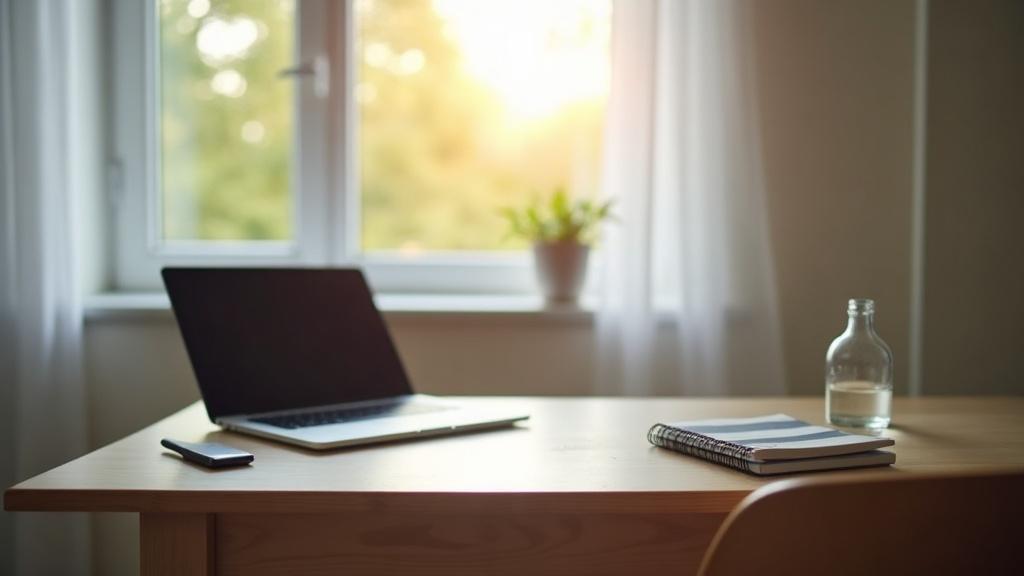
Vastu recommends facing north or east while working. North aligns with the magnetic field and is considered stable for tasks requiring sustained attention. East captures morning light and is associated with new beginnings, suitable for creative or strategic work. Facing these directions means your back is to the south or west, which tradition describes as grounding and protective.
The desk itself should sit in the southwest quadrant of the room when possible, the zone associated with stability and authority. If the room is small or the layout does not allow it, placing the desk so that a solid wall is behind you and open space is in front serves a similar purpose. Avoid sitting with your back to the door; it creates a subtle unease that most people feel even if they cannot name it.
Screen and electronic equipment
Computers, monitors, routers and chargers generate heat. Vastu associates the southeast corner with Agni, the fire element, making it the natural location for these devices. If your desk cannot move to the southwest, at least position screens and power strips to the southeast of wherever you sit.
Laptops present a compromise. Keep the device itself slightly to your right if you are right-handed, to your left if left-handed, so the screen is not directly in front of your chest. This small adjustment reduces neck strain and aligns with the idea that energy should flow across the body rather than collide with it head-on.
Avoid placing a mirror behind your screen or anywhere it reflects your working figure. The principle is not superstition but practical: a reflected image divides attention and creates a faint visual distraction that accumulates over hours.
Clutter, storage and the northwest
Clutter is not merely untidy; in Vastu it represents stagnant energy, decisions postponed, and mental load made visible. Papers that pile up, cables that tangle, and boxes shoved under the desk all contribute to a feeling of being stuck.
The northwest corner governs movement and change. Use it for items that rotate frequently: current project files, this week's reading, things that will leave the room soon. The southwest, by contrast, is where reference books, archives and long-term storage belong. This division mirrors the difference between what is alive in your work and what is settled.
Clear your desk at the end of each day. It takes two minutes and creates a boundary between work time and home time, something especially necessary when both happen in the same four walls. A clean surface in the morning is a psychological reset.
Light, air and the northeast
The northeast is associated with clarity, learning and subtle energy. If your office has a window in that direction, leave it unobstructed. Natural light from the northeast is softer and less glaring than western afternoon sun, which Vastu describes as heavy and depleting.
When natural light is limited, use full-spectrum bulbs that approximate daylight. Avoid placing a bright lamp directly behind your screen; it creates contrast fatigue. Instead, light the room generally and add a small task light to one side if needed for reading.
Air circulation matters more than most people realize. Stale air leads to drowsiness and poor decisions. If you cannot open a window, a small fan that moves air without blowing directly on you helps. The principle is gentle, continuous movement, not a wind tunnel.
What Vastu cannot do in a rented apartment
Most people working from home are renting, often in buildings where walls cannot move and windows face whichever way the developer chose. Vastu is a guide, not a prescription. If your only option is a desk facing south, you have not failed; you have worked with what is available.
Small adjustments matter more than perfect alignment. A plant in the northeast corner, a lamp that mimics morning light, a daily habit of clearing the desk—these are within your control and they shift the space noticeably. Tradition describes Vastu as a support for human effort, not a replacement for it.
For a more detailed look at how these principles apply across the whole home, the main Vastu page covers room-by-room guidance. If you are setting up a dedicated creative workspace, the Vastu Studio section addresses specific needs for artists, writers and makers.
Adjustments that take five minutes
| Adjustment | Purpose | Effort |
|---|---|---|
| Face north or east | Align with magnetic and solar flow | Move chair |
| Clear desk nightly | Create boundary, reduce mental load | Two minutes |
| Place router southeast | Match fire element with heat source | Relocate device |
| Unblock northeast window | Allow soft light and clarity | Remove obstacle |
| Use closed storage | Hide visual clutter, calm the eye | Add a box or drawer |
Working with the space you have
Vastu is not about perfect rooms; it is about noticing how a space affects you and making considered changes. A home office is often the smallest, most compromised room, carved from wherever there is space. That makes small decisions more important, not less.
The direction you face, the light that reaches you, the clutter you tolerate—these shape hours of your day. Tradition offers a framework, but you are the one who knows whether a change helps. Try one adjustment, live with it for a week, and notice what shifts. That attentiveness is the practice.